


Dewatering Screw Press Machine: Industrial Buyer Guide
Sludge disposal costs scale directly with the water still sitting inside it after treatment. A dewatering screw press machine removes that excess water through continuous mechanical compression, cutting sludge volume and transport weight before it ever leaves the plant, and doing it with far less energy than centrifuge-based alternatives.
[01] What Is a Dewatering Screw Press Machine
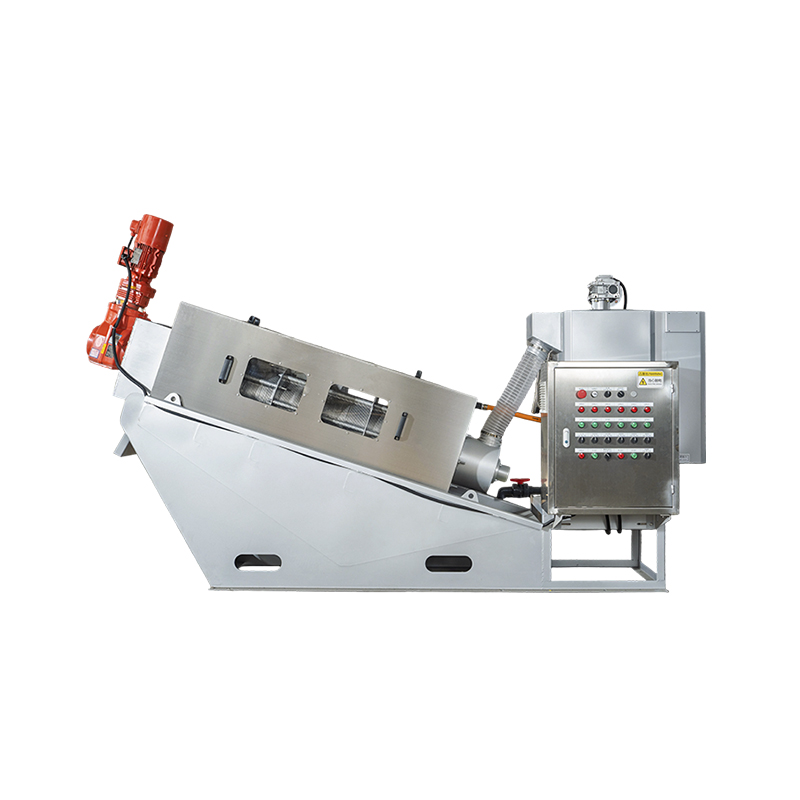
A dewatering screw press machine is a solid-liquid separation device that uses a rotating screw shaft to convey sludge through a narrowing filter chamber, building mechanical pressure that squeezes water out through the screen while solids are carried onward to discharge. Unlike centrifuges, it has no high-speed rotating bowl, which is the main reason its energy draw and noise level stay so much lower.
[02] How the Dewatering Process Flows
Wet sludge enters the chamber
Gravity concentrates the solids
Screw pressure squeezes out water
Screen separates liquid from solid
Dewatered solids exit the outlet
[03] Screw Press vs Centrifuge / Belt Press
| Spec | Screw Press Machine | Centrifuge / Belt Press |
| Energy Use | Low power draw | Higher energy requirement |
| Operation | Continuous, automatic | Requires more adjustment |
| Maintenance | Simple structure | More complex servicing |
| Noise Level | Low | Higher |
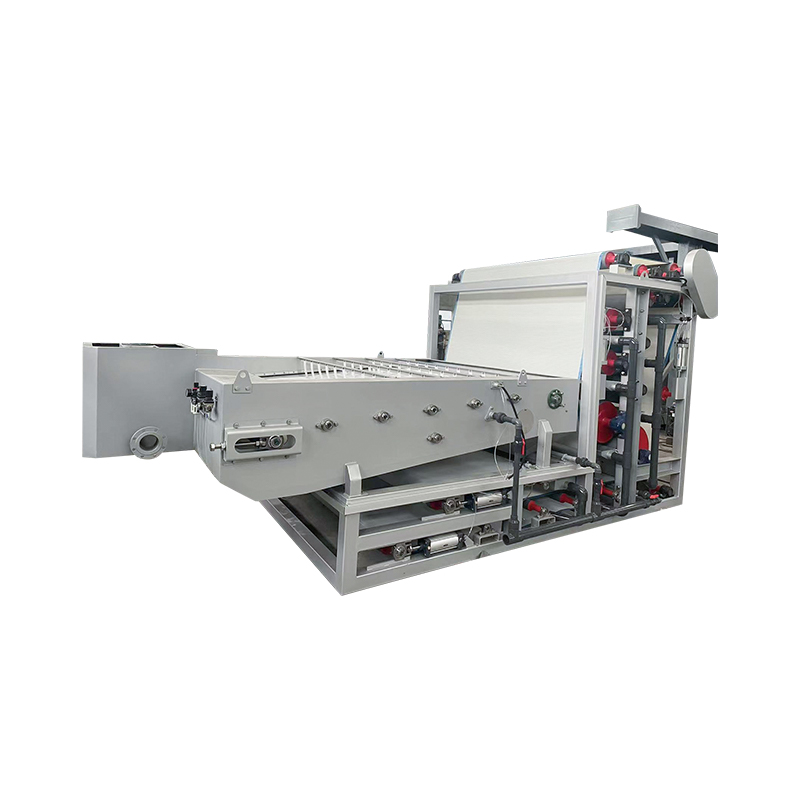
| Footprint | Compact | Larger installation area |
A dewatering machine's real cost isn't the purchase price. It's the energy bill and downtime it generates over ten years of continuous plant operation.
[04] How to Choose the Right Screw Press Machine
- Match processing capacity to actual sludge volume , including seasonal or peak-load variation, not just average daily flow.
- Confirm the sludge type is compatible. Activated sludge, food waste, and chemical residues each behave differently under compression.
- Check screw and filter ring material grade. Corrosive sludge requires higher-grade stainless steel construction.
- Review automation and self-cleaning features to reduce manual intervention and unplanned downtime.
- Ask for dewatering efficiency test data on sludge similar to your own, not just generic specification sheets.
[05] Where Screw Press Machines Are Used
- Municipal wastewater treatment: continuous sewage sludge volume reduction before disposal.
- Food processing plants: dewatering organic waste and production residues.
- Chemical manufacturing: separating liquid and solid components from process waste.
- Agricultural and livestock operations: reducing manure and biogas residue moisture for reuse.
[06] Frequently Asked Questions
How much lower is energy use versus a centrifuge?
Screw press machines generally run on significantly less power than centrifuges, since there is no high-speed rotating bowl to drive continuously.
Can one machine handle different sludge types?
Many screw press machines handle multiple sludge types, though throughput and dewatering efficiency vary and should be tested per sludge type.
How often does a screw press need maintenance?
Its simple mechanical structure and self-cleaning filter system generally require less frequent servicing than centrifuge or belt press systems.
What should buyers request before purchase?
Request dewatering efficiency data on comparable sludge, material grade specifications, and details on automation and self-cleaning capability.
 |  |
بیایید با Yixing Hengye حفاظت از محیط زیست همکاری کنیم
Contact Us- لینک های سریع
- صفحه اصلی
- محصولات
- صنایع
- شرکت
- پشتیبانی کنید
- اخبار
- تماس بگیرید
- دسته بندی محصولات
- دستگاه آبگیری لجن
- فیلتر غلتکی
- دستگاه شناور هوای محلول (DAF)
- میله مکانیکی چرخشی
- دستگاه دوز
- هواکش
- مواد بسته بندی بیولوژیکی
- سایر تجهیزات تصفیه فاضلاب
- تماس با ما
-
-
[email protected]

[email protected] -
+86-13812201185

-
+86-13812201185

-
شماره 20، جاده Saite، روستای گائویا، شهر گائوچنگ، شهر ییکسینگ، شهر ووکسی، استان جیانگ سو، چین

-



